
Product Information
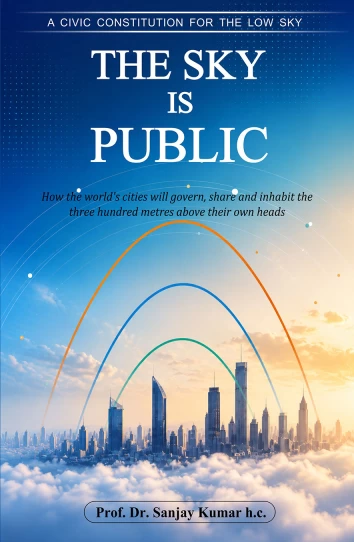
The Sky Is Public: A Civic Constitution for the Low Sky
What happens when the space above our cities becomes as important as the streets and buildings below?
For centuries, cities have carefully regulated land, roads, buildings, utilities and infrastructure. Aviation law governs aircraft at higher altitudes, while property and urban laws govern the ground. But between the rooftop and the established airways lies a rapidly transforming layer of urban space—the low sky.
The Sky Is Public explores this emerging civic frontier and asks a fundamental question:
Who should govern, share and inhabit the hundreds of metres of air above our cities?
As drones, helicopters, urban air mobility, emergency aviation, aerial logistics and other flying technologies become increasingly relevant to modern cities, the low-altitude urban environment is likely to become an important area of public policy and planning.
Prof. Dr. Sanjay Kumar h.c. approaches this subject not simply as a technology question, but as a question of governance, public consent, access, safety, accountability, equity and civic responsibility.
The book proposes a civic constitution for the low sky, structured around twelve principles covering issues such as altitude zoning, sound, protected sightlines, emergency priority, flight transparency, community consent, accessibility, economic value, data governance, automation and intergenerational responsibility.
It then develops nine practical instruments that cities can potentially use to translate these principles into policy and planning. The book also examines different types of cities, their readiness for low-sky governance, possible implementation challenges and ten ways the concept could fail.
With its combination of aviation experience, urban governance, public policy and future-city thinking, The Sky Is Public offers a distinctive perspective on an emerging issue that sits at the intersection of aviation, smart cities, urban planning and civic life.
This book is particularly relevant for aviation professionals, urban planners, policymakers, government officials, academics, researchers, smart-city professionals, drone and advanced-air-mobility stakeholders, infrastructure planners and readers interested in the future of cities.
The future of aviation will not only be decided in the sky. It will also be decided by the communities living beneath it.
Keypoints:
- Explore why the low-altitude airspace above cities may require a new approach to civic governance.
- Understand twelve proposed principles for managing the emerging urban low sky.
- Discover nine practical instruments for translating low-sky principles into municipal planning.
- Examine the relationship between aviation, drones, urban mobility, community consent and public policy.
- Gain a future-oriented perspective on how cities may govern, share and inhabit their airspace.
Bullets:
- A New Perspective on Urban Airspace
- Explores the governance of the low-altitude airspace above modern cities.
- Civic Constitution for the Low Sky
- Presents twelve proposed principles addressing governance, safety, access, sound, data and accountability.
- Practical Urban Governance Framework
- Introduces nine instruments designed as potential tools for municipal planning and implementation.
- Aviation + Smart Cities + Public Policy
- Connects aviation management with urban planning, future mobility and civic governance.
- Future-Focused Professional Reading
- Relevant to aviation professionals, policymakers, urban planners, researchers, academics and smart-city practitioners.
Information
| Format | Paperback , EBook |
|---|---|
| ISBN No. | 9789363880139 |
| Publication date | 14 August 2026 |
| Publisher | Rigi Publication |
| Publication City/Country: | India |
| Language | English |
| Book Pages | 124 |
| Book Size | 5.5" x 8.5" |
| Book Interior | Black & white interior with white paper (Premium Quality) |
About Author
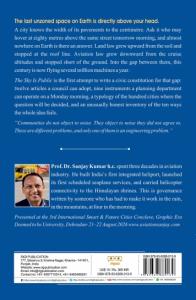
Prof. Dr. Sanjay Kumar h.c. is a senior aviation professional, academic and aviation-management expert with nearly three decades of experience in the aviation industry.
He serves as Professor & Chair Head, Aviation Management at Graphic Era Deemed to be University, Dehradun, and has previously served as Executive Director and Officiating CMD (as assigned) of Pawan Hans Ltd., Ministry of Civil Aviation.
His professional journey has included work at the practical end of aviation infrastructure and helicopter connectivity. He has been associated with the development of India's first integrated heliport, the launch of scheduled seaplane services and helicopter connectivity to Himalayan pilgrimage destinations.
His experience has brought him into contact with the operational, administrative, regulatory and community dimensions of aviation—where technology and infrastructure must ultimately work within real communities and public institutions.
In The Sky Is Public, he brings this practical experience into a broader discussion about the future governance of low-altitude urban airspace.
Rather than treating the low sky simply as an aviation or technology problem, he examines it through the lens of civic governance, public participation, urban planning, access, accountability and sustainability.
The book reflects his interest in connecting aviation management with the evolving needs of future cities and the communities that inhabit them.
More Books in English

WHILE THE WORLD WAS WATCHING - A Teen's Journey Through School, Friendship, Sports, Growing Up and Finding Myself By Satnam Kaur Batth

Applied Microbiology and Infection Control Including Safety - A Textbook for B.Sc. Nursing Students

WORLD LITERATURE IN YOUR FIST Volume - 2 | Fourth Edition 2026 | British Literature: Part II — Victorian Age to Post-Modern Age | A Comprehensive Guide for NTA UGC NET, JRF, SET, GATE, GSET, MHSET, KSET & APSET English Literature | Dr. Prem Shankar Pandey

The Stress Reset - A Practical Journey Through Yoga, Meditation, Mindful Thinking and Inner Balance by Aaeyusha | Rigi Publication
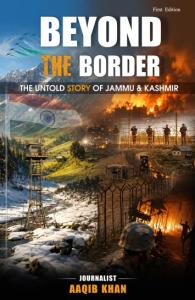
Beyond the Border: The Untold Story of Jammu & Kashmir By Journalist Aaqib Khan | Rigi Publication
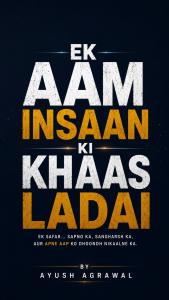
EK AAM INSAAN KI KHAAS LADAi By Ayush Agrawal
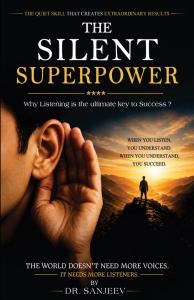
The Silent Superpower: Why Listening Is the Ultimate Key to Success By Dr. Sanjeev | Rigi Publication
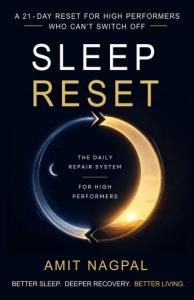
SLEEP RESET | A 21-Day Protocol for High Performers Who Can't Switch Off | Amit Nagpal | Rigi Publication
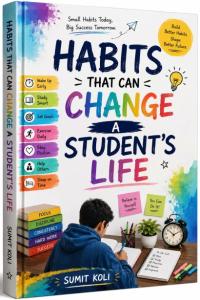
7 Habits That Can Change a Student’s Life
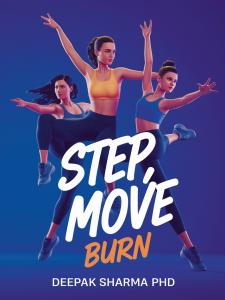
Step, Move, Burn: The Science Behind Aerobic Dance
You May Also Like
WHILE THE WORLD WAS WATCHING - A Teen's Journey Through School, Friendship, Sports, Growing Up and Finding Myself By Satnam Kaur Batth
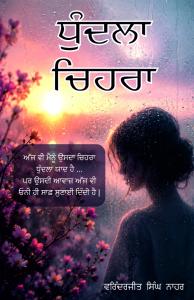
DHUNDHLA CHEHRA - A Punjabi Novel of Memories, Relationships, Unspoken Emotions and the Echoes of the Past | Varinderjit Singh Nahar | Rigi Publication
WORLD LITERATURE IN YOUR FIST Volume - 2 | Fourth Edition 2026 | British Literature: Part II — Victorian Age to Post-Modern Age | A Comprehensive Guide for NTA UGC NET, JRF, SET, GATE, GSET, MHSET, KSET & APSET English Literature | Dr. Prem Shankar Pandey
The Stress Reset - A Practical Journey Through Yoga, Meditation, Mindful Thinking and Inner Balance by Aaeyusha | Rigi Publication
Beyond the Border: The Untold Story of Jammu & Kashmir By Journalist Aaqib Khan | Rigi Publication
The Silent Superpower: Why Listening Is the Ultimate Key to Success By Dr. Sanjeev | Rigi Publication
SLEEP RESET | A 21-Day Protocol for High Performers Who Can't Switch Off | Amit Nagpal | Rigi Publication
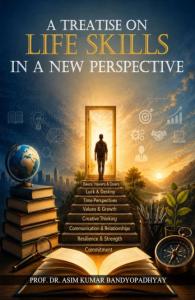
A Treatise on Life Skills in a New Perspective | Life Skills, Leadership & Personal Growth | Prof. Dr. Asim Kumar Bandyopadhyay
Nobody to Somebody | Best Wealth Creation, Business Mindset & Self Help Book by Dr. Sanjeev | Rigi Publication